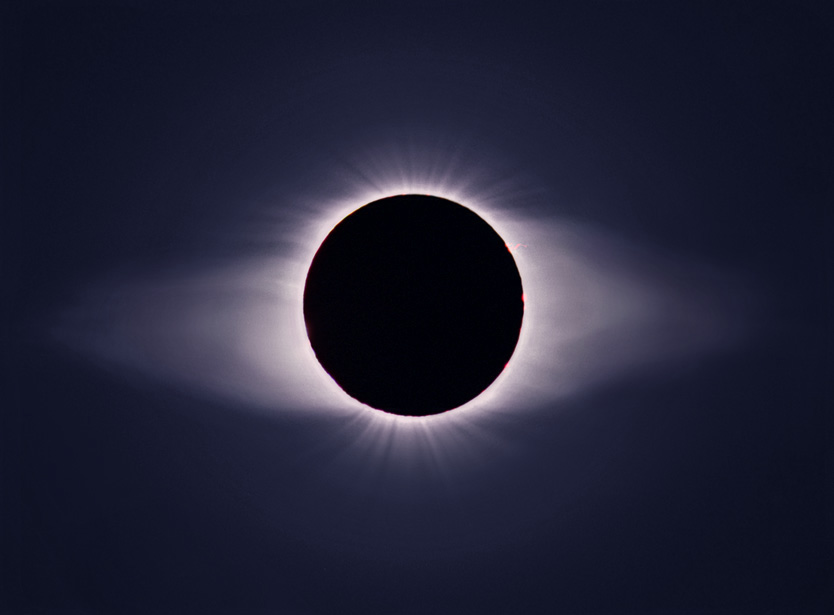
Meteor showers can be an exciting visual and photographic experience. This Saturday morning, amateur astronomers in the South Central and Midwest US will have a good opportunity to see the Leonid Shower.
A meteor shower occurs when the Earth's orbit passes through the orbit of a comet. Over the centuries, debris gets scattered throughout the comet's orbital path. The debris field is thicker the nearer it is to the comet, which is why some years' showers are more intense.
Early morning is the best time to see a meteor shower. The Earth is moving into its orbit from our perspective, so we see the sky as a front windshield more or less. Early morning also has a better chance for still skies, since residual heat has usually dissipated overnight. Clouds can add some drama to photos, but they can also obscure the meteors. A relatively cloudless forecast is preferred, but a few clouds won't hurt. We also need the Moon, Earth's natural satellite, to either be down or in a a very small phase. The Moon is really bright and will obscure most if not all meteors.
Now, how to take the photos. First, we want to be in a dark sky location. For many suburbanites, this means traveling away from city lights. Even country dwellers will need to avoid security lights on their properties.
For viewing, naked eye is actually the most enjoyable method. Telescopes and very powerful binoculars will narrow ones vision too much to be of any real help. Likewise photographically, we would want to use lenses in the shorter range. From normal to wide angle works well for many astro-photographers. A tripod is a must, the sturdier the better. Do you know your lens' optimum aperture? On most lenses, it is about two or three f-stops down from wide open. Avoid stopping the lens all the way down or using it wide open. With point light sources, those extremes of lens aperture introduce undesirable optical effects that we would never notice with other subjects.
Look East. Frame up a decent view. Manually focus to infinity (but not beyond!). Open up the shutter on BULB for times from several seconds to several minutes. This means you will probably have to use a DSLR, though some P&S from Nikon, Canon, and Fuji have the BULB setting too. If you have an equatorial mount set up, you will get crisp views of the night sky objects and hopefully some meteor streaks. If using a regular tripod, you will record curved star trails. Any straight streak going against the direction and curve of the trails is a meteor.
Post production, you will need to color correct white balance to get a realistic looking dark sky color and be sure to lower the noise level as much as possible. Sharpness enhancing may be a good idea, too.
I'll be out facing East from about 3:00am til I see the morning glow of sunrise (which is another fun time for landscape photos with a different feel or look).
Enjoy!
Thanks to 3.bp.BlogSpot and Science Photo Library for the illustrations.